
Synergy Between PENS, BNPB, and PT TIM: Realizing the "GerakCepatBencana" Platform for National Resilience
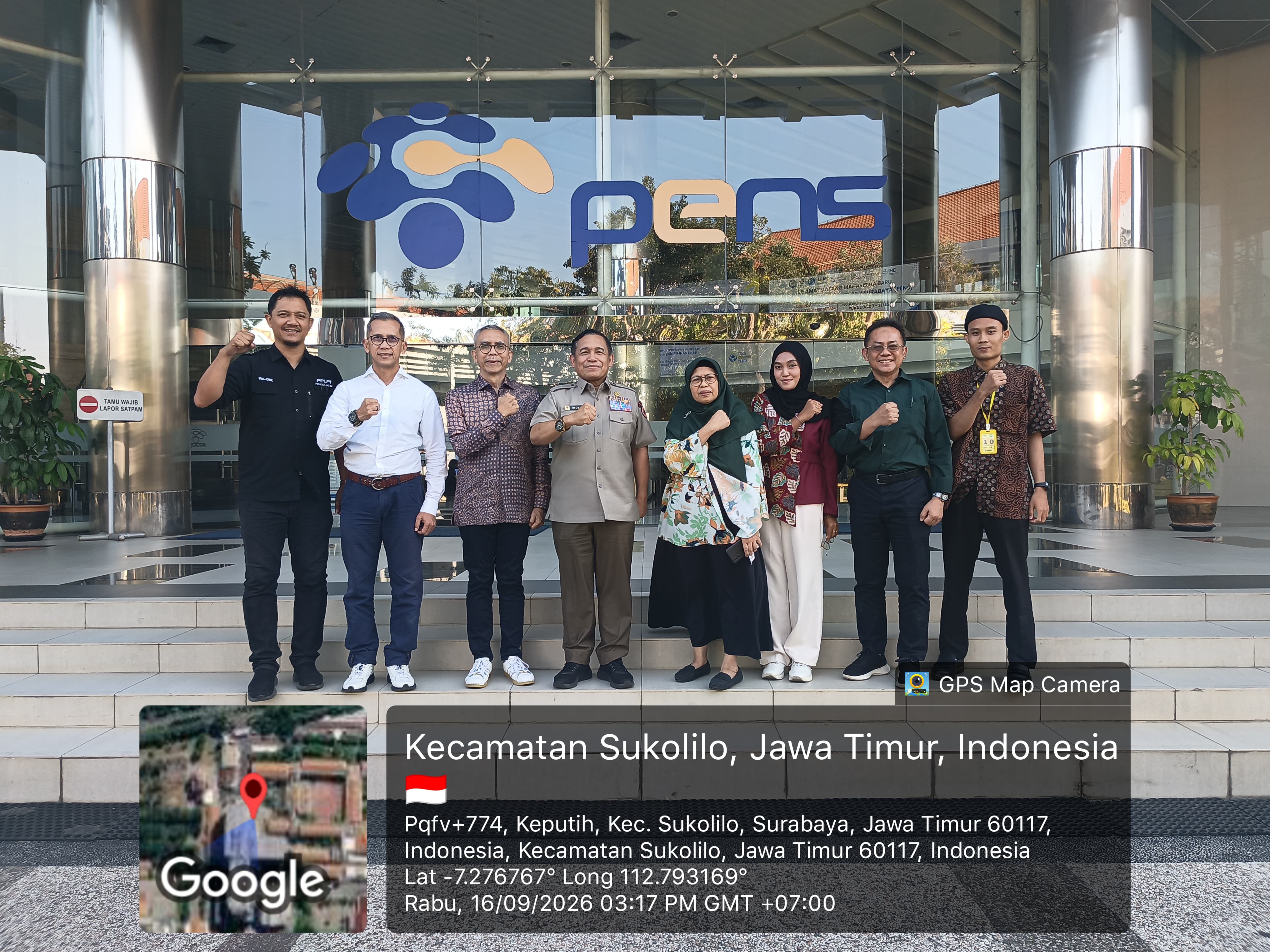
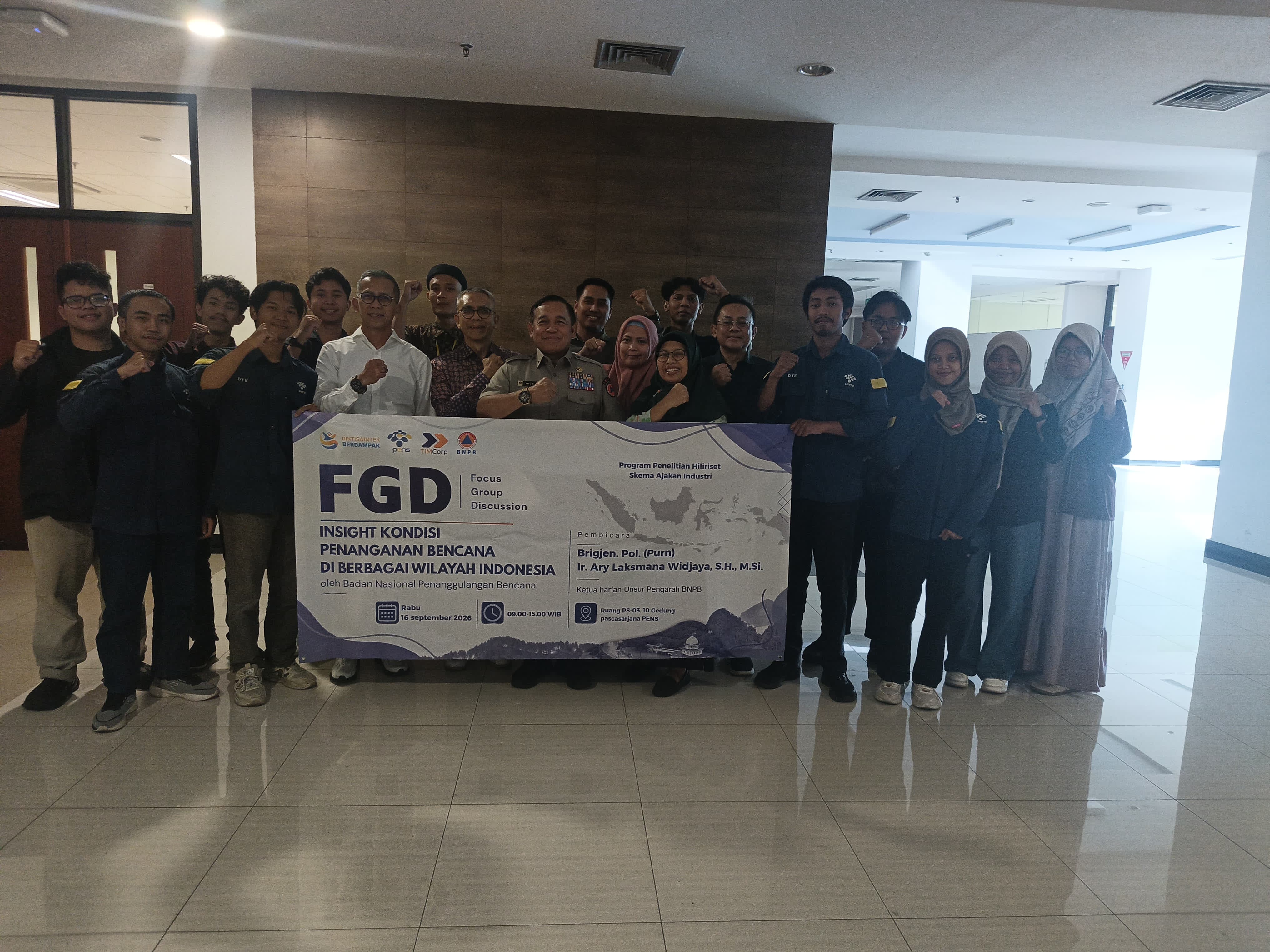
Surabaya, Indonesia — Facing extreme geographic vulnerability, the speed and accuracy of information form the first line of defense. Responding to this challenge, the Politeknik Elektronika Negeri Surabaya (PENS), alongside the Baden Nasional Penanggulangan Bencana (BNPB) as National Disaster Management Agency in Indonesia and PT TIMCorp, recently held a strategic Focus Group Discussion (FGD) to formulate GerakCepatBencana—an intelligent, AI-driven platform designed to unify fragmented disaster data across Indonesia.
Historically, sub-district government staff have had to navigate multiple disparate portals—such as InaTEWS for tsunami warnings and InaRISK for risk indices—during an active crisis. Local IT skill gaps at the district level further bottleneck real-time threat response.
Through this cross-sector collaboration, PENS, BNPB, and PT TIMCorp agreed to build a centralized system architecture. Adapting the resilience of advanced early warning systems like Japan's J-Alert, the GerakCepatBencana platform will leverage Retrieval-Augmented Generation (RAG) and Large Language Models (LLMs). This system will integrate all evacuation protocols, live weather data, and disaster SOPs into a single, interactive chatbot interface.
This initiative not only slashes regional infrastructure operational costs but also guarantees national data sovereignty and security in strict compliance with the Personal Data Protection Law (UU PDP). The GerakCepatBencana initiative proves that with the right technology and inter-agency synergy, Indonesia can build a world-class crisis management system that is efficient, secure, and highly accessible to all frontline responders in the regions.
Project Analysis (STAR Method)
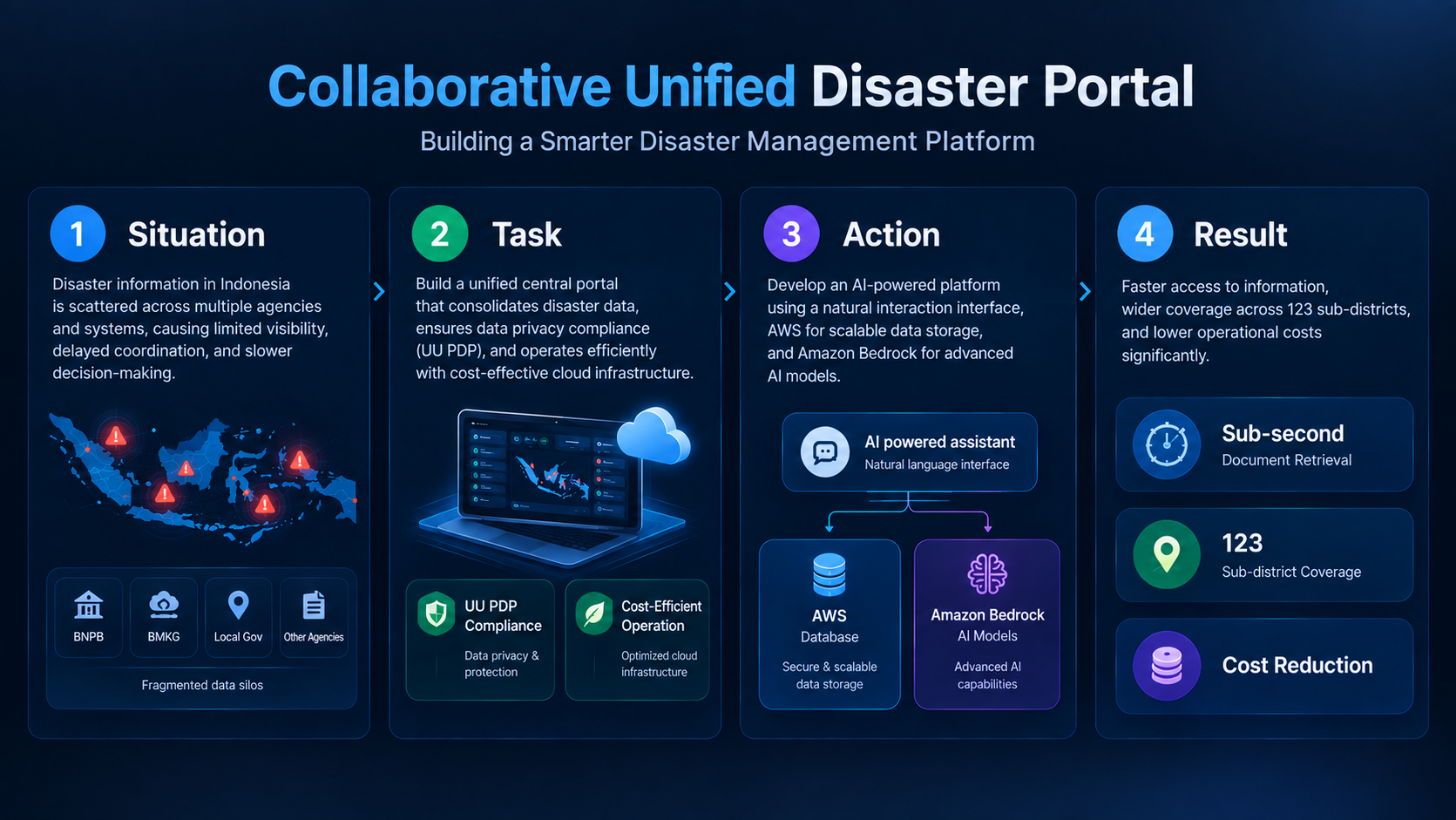
Situation: Indonesia faces extreme natural disaster risks, yet crisis management data remains siloed across various agency systems. Government staff across 123 sub-districts struggle to access comprehensive information rapidly during emergencies, exacerbated by local IT skill gaps and constrained infrastructure budgets.
Task: PENS, BNPB, and PT TIMCorp needed to design a unified platform (GerakCepatBencana) to consolidate disaster data into a single interactive gateway. The system had to be highly cost-efficient, accessible to non-technical staff, and 100% compliant with UU PDP data localization mandates.
Action: The team conducted an FGD to align operational and technical requirements. The architectural solution was designed using a centralized approach (hosted in AWS Jakarta region) to eliminate regional server costs. The system was built utilizing a user-friendly unified frontend, powered by a AWS database engine, and connected to a multilingual AI model capable of processing both text and field damage photos.
Result: The collaboration produced a ready-to-implement smart disaster management blueprint. The MVP (Minimum Viable Product) architecture drastically reduced development costs while delivering sub-second retrieval of SOP documents, enabling sub-district staff to instantly access localized evacuation instructions without requiring specialized IT training.
AWS Reference Architecture (GerakCepatBencana MVP)
Based on the agreed scalability and cost-efficiency parameters, the following is the initial cloud architecture designed to strictly adhere to Indonesian data localization laws:
Base Region: ap-southeast-3 (Jakarta) to ensure all strategic government data remains within national borders.
Core Compute (EC2): Utilizes an ARM-based instance to achieve the highest price-to-performance ratio. Compute processes are consolidated within an internal Docker network to prevent public port exposure.
Frontend Layer: serves as the centralized, interactive portal accessed by all sub-district staff, equipped with Role-Based Access Control (RBAC) to restrict sensitive data to authorized personnel.
Database Layer (RAG): PostgreSQL + pgvector runs locally inside a container to store the entire matrix of BNPB documents (SOPs, evacuation routes, policies) without incurring expensive managed service fees during the prototyping phase.
API Gateway Layer: LiteLLM Proxy acts as a secure communication bridge between the local system and cloud services, eliminating the need to hardcode or expose AWS access keys.
Intelligence Layer (AWS Bedrock):
LLM as Foundation Model (FM): Serves as the primary engine for Indonesian language processing, ensuring natural and accurate text communication.
FM as Embedding Model: Deployed to map and vectorize BNPB documents for highly accurate multilingual search retrieval.
FM with Multimodal Support: Positioned specifically as a low-cost, multimodal vision model to instantly analyze photographic damage reports uploaded directly from the field.